Thursday, April 10, 2008

Our New Space


Sometimes change is just what the doctor ordered. In our case even more so.

Although it has taken a while to get settled, our new space fits us well.

Again we owe a debt of gratitude to all the people worked with us on our new office.

Monday, March 03, 2008

More Than A Garage


Today’s garage, in some ways, is simply an update of the nineteenth century carriage house. Compared to today, those structures seemed more important and therefore more time was taken for planning both the look of the buildings and their relationship to the home. Often the carriage house was part of a barn or stable and occasionally included living quarters above.

I consider the character and placement of a freestanding garage as important as locating the house on the property since the addition of a garage begins to make an isolated house into a compound. A garage structure can be used to block winter winds, an unsightly view or to simply provide an attractive element in a landscape composition.

When a client asks us to design a garage for their home, one of the first questions we ask is: “Do you think you would ever need additional living or storage space?” and most of the time the answer is “Yes”. Compared to building free standing guest quarters or studio space, the second floor of a garage is the best deal in town. Since you already have a roof and foundation, the additional costs include taller side walls, a stronger ceiling/floor, and a stair to create usable raw space for storage.

Once the building is framed, finishing off the space can be accomplished modestly or at great expense just like you would any room in your home. A living space over an unheated garage does present some unique challenges. First the floors as well as the roof must be very carefully insulated. Secondly the water and septic lines must be insulated until they are in the ground below frost line. The garage space must be separated from the living space by fire rated sheetrock and any door into the living space from the garage must also be fire rated.

As far as taking care of cars, we have designed garages with radiant heat in the slab as well as air conditioning. For one car collector we included lifts and an oil changing pit as well as a two story viewing gallery.

Whether you need a simple structure to cover a car, a place to display a valuable antique, or a multipurpose building for cars and guests, the architectural details and the relationship to existing structures is as important to consider when designing the garage as any building on your property.

A Room for Mud


A Room for Mud

Living through the seasons in the Northeast reminds me of my daughters’ favorite book ‘Going on a Bear Hunt’ where the father, the kids and the dog go looking for a bear and when they find one, they run home through the snow storm (Hoooo woooo), the forest (Stumble trip), the mud (Squelch squerch), the water (Splash splosh) and back through the grass (Swishy swashy). They then run into the house(without wiping their feet), up the stairs, into bed and under the covers with the bear looking through the window. I’m sure that having a mud room to shed the wet and muddy layers would have made mom happier when she came home.

Just about every home we design includes a mud room which is good for keeping bears out, but more importantly provides a place to take off boots and coats and leave the mud and slush behind. Mud rooms are also the primary place for organization of outer wear for future excursions. More elaborate spaces include slop sinks for cleaning gear and storage space for sports equipment and even sometimes a dog grooming area. Some layouts also work as an airlock to the rest of the home.

The basic requirements include a non slip, water resistant, durable floor. Walls and cubbies should be made of a rugged material such as wood with plenty of room to hang coats and store boots, gloves and mittens. Occasionally we will add a center drain to the floor for easy wash down(make sure the baseboards are waterproof). A bench with or without a hinged seat top is required for putting on and taking off those extra tight boots. Near the ceiling, a long shelf comes in handy for hats and other paraphernalia.

Even though the mud room can be the smallest room in the house, from its organizing capacity to the impact of a cleaner home, this little room earns its keep.

Thursday, December 20, 2007

The Beauty of a Construction Site


Something that architects and contractors take for granted but that homeowners rarely experience, is the construction site. When it is your house being built or added onto, I recommend that you spend as much time as possible with the “insides” of the place that will become your home. Having said that please be sure to watch your step.

It is a bit like viewing the inside a person during an operation. Yes, it may be messy and confusing unless you know how everything works, but it is always fascinating and sometimes beautiful. Not to take the metaphor too far, but a home has structure like we have bones, wiring and controls as we have nerves, and mechanical systems like we have….maybe I’ve gone too far, but you can see where I’m going.

The most universal observation is that during the building process, the scale of rooms and the way we perceive the overall design, changes dramatically. Depending on the phase of construction the building can look out of proportion. When the foundation is poured the space may look too small, with the framing up, the building may look too large. Trim, siding, windows and roofing bring the massive structure back into proportion. Inside finishes and trim as well as cabinetry and paint make a room that felt too large or small, feel comfortable.

The craftsmanship that goes into the framing and rough plumbing and electrical work pays off as the home is being finished. Straight, plumb, and square walls and floors make the trim carpenter’s work easier and faster. You can tell a lot about a contractor by the way the early stages of the building are completed. If they care about the way the house is framed, chances are they will take the same care in finishing the job. Holes drilled in studs, post and beams may be alarming to homeowners, but as long as they do not impact the structural integrity, they are just part of the process.
A friend and talented photographer, Michele Muir was at one of our construction sites on assignment, and took some time to record the beauty of the jobsite. I must admit that I sometimes miss the beauty and simplicity of light and shadow on a jobsite while trying to make sure the windows are in the right places and the plumber hasn’t cut too much out of a beam. It is the job of artists to find beauty in things we take for granted and Michele has done that well.

Monday, October 29, 2007

We are moving!


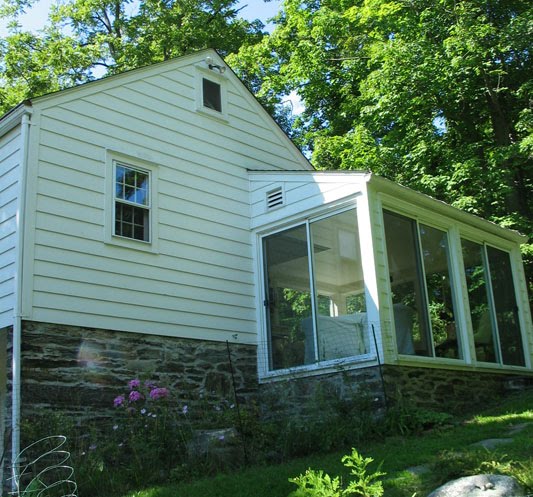
As much as I love my routine, we are about to begin a new one in a larger more beautiful space just down the road from our old office in the village of Millbrook. We are still in town (just outside the village) on route 44 heading toward Amenia. As you can see in the photos, we are moving into the space recently used by Arrowsmith forge as their showroom. They have moved a part of their showroom into the village, but will open a larger display area next door to our office and their foundry.

I am learning, that we are our worst clients. We change our minds with such frequency drawings are not dated by the day, but by the hour. The men we work with on the site are truly saints. Were they not our friends, they would have fired us long ago. That being said, the construction is flying along and we should be in the new office by mid-November. There are many things to coordinate and much to move, but one day soon we will hail from 3788 Route 44, Millbrook, New York.


Thursday, August 23, 2007

In the Kitchen


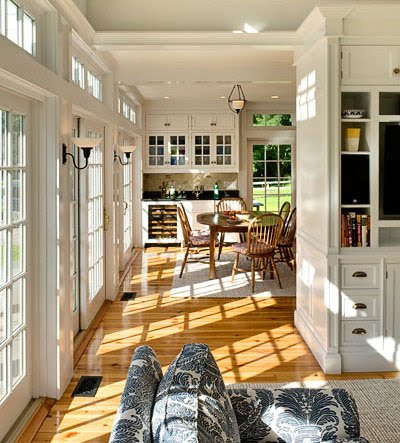
One of my favorite times in the kitchen is Saturday afternoon, all by myself, making a big mess preparing Creole and Cajun dishes. Whether I’m trying to cook my roux(flour and oil) to the perfect nutty brown for Gumbo, or making a simple pot of Red Beans and Rice, it is my place to unwind and anticipate the good food to come. At our home like most of the homes we design, the kitchen is the heart of the structure. Our ‘eat in kitchen’ is where we have family breakfasts and dinners, we help with homework, we gather with friends and family to discuss the important things in life. The kitchen is a magnet for gatherings and conversation. Many homeowners decide to renovate and expand when they realize they just can’t keep people out of the kitchen.

When designing a kitchen, it is important to remember the chicken/broccoli rules. That is, those two items generally come out of the refrigerator, are washed in a sink, will be cut up, and seasoned on a countertop cutting board, and will then probably end up either on the stove or in the oven(this pattern is also known as the work triangle). The kitchen should be designed to make this pattern work as efficiently as possible.

Some things to keep in mind while designing your kitchen:
· Provide the main sink with a view, hopefully a window.
· Design the kitchen to feel comfortable with the house.
· Provide ample storage and a pantry if possible.
· Allow for plenty of natural light as well as electric lighting on dimmers. You don’t have to turn them on, but they are there if you need them.
· Leave room on countertops for stuff, it always accumulates.
· Choose materials carefully:
o Some look great but are hard to keep stain free(if that is what you are looking for), i.e. marble and limestone
o Some can look cold, i.e. some granites
o Some may need to be replaced over time, i.e. butcher block around sinks
· Make your kitchen a fun place to be. You, your family and friends are going to spend a lot of time there.

The kitchen is one of the most expensive rooms in a home because of the cabinets, plumbing, appliances, finishes, etc. In most cases it also gets some of the most use and can increase the property value as well as the sense of enjoyment so important to making a home.
Crisp Kitchen Before
Crisp Kitchen After

Commander’s Red Beans

1 cup of chopped onions
½ cup of chopped bell peppers
½ cup of chopped celery
2 cloves of garlic, minced
½ pound of ham, diced
1 tablespoon of butter
½ pound of beans
water to cover the beans
salt and black pepper to taste
cayenne pepper to taste
¼ tablespoon of thyme
2 bay leaves
¼ tablespoon of oregano
½ pound of hot pork smoked sausage or Kielbasa (sliced)

Saute onions, bell peppers, celery and garlic with the ham in the butter in a large sauce pan until the vegetables are soft. Add the beans with enough water to cover. Add the salt, pepper, cayenne, thyme, bay leaves, and oregano and cook until the beans start to break up (about 2 hours). Add sausage and cook slowly for approximately one hour, until beans start to change color and are getting thick and creamy. Stir occasionally to prevent beans from sticking to the bottom of the pot. Remove from the heat until they are ready to serve. Serve hot.
Serves 8 to 10.
COMMANDER'S PALACE
1403 Washington Street, New Orleans, Louisiana


Monday, March 19, 2007

The Reluctant Authors (of On the Porch)


For almost as long as I have written this column about architecture, there has been a line at the end mentioning the upcoming publication of On the Porch written by Sandra L. Mahoney and myself. As the days draw near to this momentous event in our lives, my editor at Dutchess, Kate Goldsmith, asked me to write something about the book.

Our becoming authors did not follow the standard arc of most aspiring writers. I will admit that around the office we had mused occasionally about writing a book. If you are modestly successful at your profession and past a certain age, I think that just goes with the territory. That being said, I don’t think we ever seriously considered the next step in writing a book or had even come up with a realistic topic.

A couple of years ago, one of our projects which included a glassed-in porch was featured in Renovation Style magazine. As fate and luck had it, Inspired Home, a beautiful, well researched and now defunct magazine, asked us to write an article on porches. Sandee and I wrote the article which, combined with the fact that most projects at Crisp Architects include at least one porch, led Taunton Press to our doorstep. For good reason, there has been a long resurgence of interest in the American porch, and Taunton Press, being one of the most respected ‘shelter’ magazine and book publishers, saw a need for a new porch book. They decided to take a chance on two people who had never come close to writing a book. We, on the other hand, were flattered and anxious, and could not imagine how we would possibly be able to manage the increased work load, but in the end, we could not say no.

So, after discussing the pros and cons with our respective families(who would have to take up a lot of our slack at home) we jumped in, head first into the world of editors, publishers, photographers, and best of all…porches. When we told our friends that we were writing a book on porches the stories and childhood experiences came pouring out in wonderful detail. That confirmed what we believed about the importance of porches to our homes and our lives.

The first task in actually writing the book was to come up with an outline. With a lot of help from our editor, we settled on a format which included: before and after porches with their stories, details of how to build porches and make them work on a home, portfolios of porches around the country, historic examples with context, and finishing touches such as furniture, lighting, and accessories. And that was just the beginning.

As a member of the American Institute of Architects I put out a call for architects across the country to submit their favorite porch additions. Our summer intern, Evan Hauptman, spent the better part of that summer logging and filing submissions from architects and architecture schools nation wide. Once we and our editors had chosen which porches to include, Taunton Press hired photographers to take the best photos possible. Sometimes waiting days for just the right light. Luckily we only photographed the porches of very understanding and gracious homeowners.

Over the course of more than a year we wrote, and our editors rewrote, and we selected and reselected photos and stories to include in the book. We researched things we thought we knew already about porch history and materials and details. Admittedly, there were some days we felt like sausage makers.
(Originally published in Dutchess Magazine) Photos by James M Crisp, Brian Vanden Brink, and Rob Karosis


In the end, with the help of knowledgeable editors, talented photographers, gracious homeowners, and many writers and architects who came before us, we put together a book we are proud of. Our hope is that this book will encourage some fence sitters to become porch
sitters and others to learn the pleasures of sitting on the porch. (Available April 10th, at your favorite bookstore)